Calendar intelligence · Kenya
A public holiday that falls on a Tuesday, Wednesday or Thursday changes the shape of the week. People may travel, take a bridge day, attend an event, stay close to home or protect the day for family, and each choice affects timing, ticket demand and transport.
Quick answer: Start with the exact public-holiday date, identify the working days around it, then decide whether a bridge day is realistic. Plan the location, travel, event timing, ticket purchase and return-to-work schedule in that order so the holiday fits the time you actually have.
Key points:
- A bridge day is the normal working day between a public holiday and a weekend.
- A midweek holiday creates different audience behaviour from a Monday or Friday holiday.
- Travel, accommodation and the first working day after the holiday should be planned before buying a ticket.
- Organisers should market exact dates and times instead of assuming everyone has a long weekend.
What is a bridge day in Kenya?
A bridge day is a working day that sits between a weekend and a public holiday. If the holiday falls on a Tuesday, for example, Monday becomes the bridge day; if it falls on a Thursday, Friday can play the same role.
The bridge only becomes part of a continuous break for people who can take leave, work flexibly or already have that day free. Students, shift workers, hospitality staff, healthcare workers and many other people may have completely different schedules.
That distinction matters for both travellers and event organisers. A campaign that says “four-day weekend” can sound attractive, but the underlying dates should still be stated clearly so the audience can judge whether the plan fits their own calendar.
Why does a midweek holiday change event demand?
A Monday or Friday holiday naturally extends the weekend for many people. A Tuesday or Thursday holiday creates a break in the working week, which produces more varied behaviour.
Some people use annual leave to connect the days, some travel only for the public holiday, and others stay in their home county because the return to work is too close. Event demand can therefore split across the ordinary weekend, the bridge day and the holiday itself.
For organisers, that means the calendar is part of audience segmentation. The same event concept may perform differently on Saturday, on the bridge day and on the actual public holiday because the available audience is different on each date.
How should attendees plan a midweek public holiday?
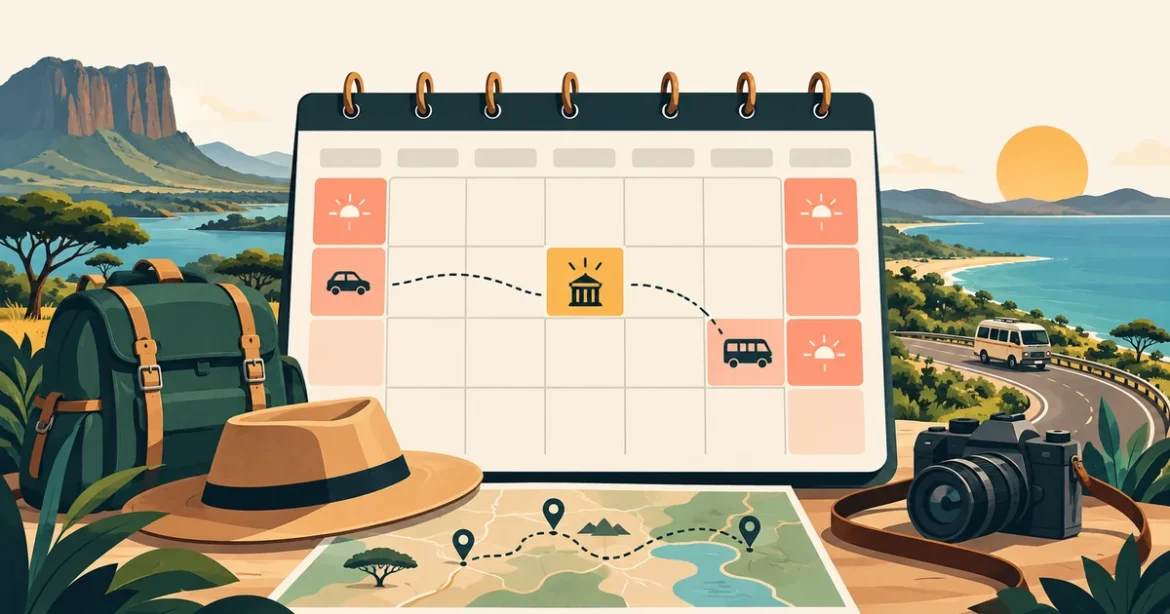
Start with the fixed date, then mark the weekend before it and the first normal working day after it. That simple calendar view makes the real travel window visible before money is committed.
Next, choose the county or city. A local event may only require transport and admission, while an out-of-town festival can add accommodation, meals, transfers and an earlier return journey.
Only after that should you compare specific events. Check the organiser, venue, start time, closing time, registration status and entry rules through a current official source before paying.
How should you budget for a bridge-day trip?
The ticket price is rarely the full cost of the experience. Transport, accommodation, meals, parking, local transfers and the return journey can easily become the larger share of the budget.
For groups, agree on the travel plan before one person starts collecting money. A cheap ticket can still create a difficult weekend if the group has different assumptions about accommodation, departure time or the return home.
Build a small contingency into the budget as well. Public-holiday travel can bring unexpected transport changes, traffic delays or higher last-minute accommodation costs, especially on popular routes.
When should you buy an event ticket?
Buy once the practical plan is clear enough that the ticket will actually be used. The lowest early-bird price is only useful when the date, location and travel requirements are workable.
Phased pricing can reward early commitment, while later tiers may cost more as the event gets closer. Our guide to event ticket pricing in Kenya explains how ticket phases, demand and average ticket yield fit together.
Before payment, confirm whether the ticket can be transferred, whether the event has a refund policy and which channel the organiser recognises as official. Keep the payment confirmation and ticket email in an accessible place for event day.
What should event organisers do differently?
Build the campaign around the audience that is actually free on each day. Saturday may reach the broadest leisure audience, while the bridge day can work better for people on leave, travellers or a deliberately niche format.
The public holiday itself can support family activities, sport, culture, conferences, daytime entertainment and headline shows. The strongest proposition depends on what the audience wants from the day and how much time they have before work or school resumes.
Messaging should name the exact date, start time and expected duration. Clear logistics help buyers decide quickly and reduce support questions later in the campaign.
How should organisers think about ticket phases?
A compressed holiday campaign may need fewer pricing phases than an event selling for several months. Every phase should have a clear purpose, such as rewarding early commitment, protecting capacity or creating a final urgency window.
Avoid repeatedly extending a deadline when the campaign relies on scarcity. Audiences learn quickly when a “last chance” message keeps returning.
Organisers should also watch where buyers are coming from. If a meaningful share of the audience is travelling, earlier sales can be more valuable because they give customers enough time to organise the rest of the trip.
How does Mashujaa Day 2026 illustrate the idea?
Kenya’s Public Holidays Act fixes Mashujaa Day on 20 October. In 2026, 20 October falls on a Tuesday, so Monday 19 October sits between the ordinary weekend and the public holiday.
A person who has Monday free can create a continuous break from Saturday through Tuesday. Someone working on Monday has a different pattern: weekend, workday, public holiday, then a return to work on Wednesday.
The example shows why exact calendar language matters. The planning method remains useful in any year when a Kenyan public holiday lands close to a weekend.
For the organiser-side 2026 case study, see our Mashujaa Day organiser-planning guide, which looks at timing, competition and audience behaviour around the holiday.
A practical planning order
- Confirm the official public-holiday date.
- Mark the weekend, bridge day and first normal workday after the holiday.
- Decide whether the bridge day is genuinely available.
- Choose the county or city.
- Budget transport, accommodation, meals and admission together.
- Verify the organiser, venue, time and entry information.
- Buy the ticket once the logistics are workable.
- Plan the return before committing to the final activity.
Frequently asked questions
Is a bridge day automatically a public holiday in Kenya?
No. A bridge day is normally an ordinary working day unless the government separately declares it a public holiday or your own work or school schedule gives you the day off.
Why are exact dates important in holiday event marketing?
They prevent the campaign from assuming everyone has the same time off. Exact dates also help attendees plan leave, travel and the return to work.
Should I buy the cheapest early-bird ticket immediately?
Buy early when the date and travel plan are realistic for you. The lower ticket price can be outweighed by unused accommodation, transport changes or a ticket you cannot use.
Where can I look for events across Kenya?
Tikosocial’s event discovery page is designed to surface events by category and location as more organisers list on the platform.
Planning around a public holiday? Start with the calendar and the journey, then choose the event that fits the time you actually have.
Sources and further reading
- Kenya Law — Public Holidays Act
- Tikosocial — How to Price Event Tickets in Kenya
- Tikosocial — Event discovery
Last reviewed: 19 October 2026. Recheck statutory holiday dates if this article is materially updated in a later year.