Raha na Rhythm · Build in Public #3
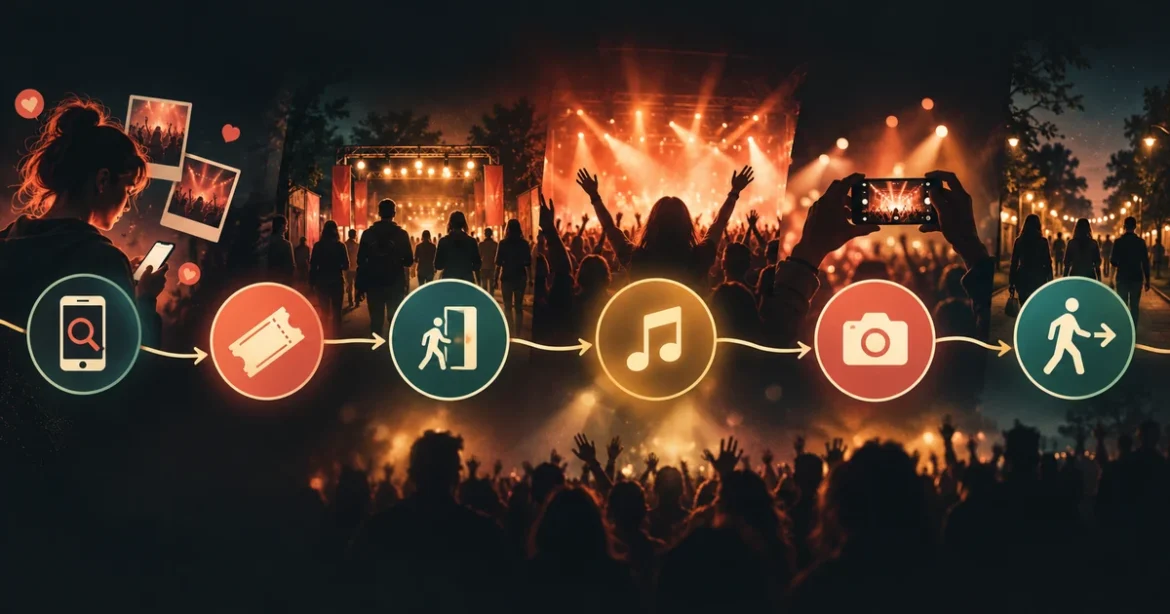
A live event starts forming long before the first guest reaches the venue. This Road to RNR4 update maps the audience journey from discovery and ticketing through arrival, the live programme, content capture and the final trip home.
Build focus: Design the event from the audience’s point of view. Every handoff between marketing, ticketing, production, venue operations and post-event content should make the next step easier to understand.
What the audience journey includes:
- Discovery: how someone first understands the event.
- Decision: whether the event feels worth the time and money.
- Ticketing: how easily the person can commit.
- Arrival: transport, queues, security and first impressions.
- Live experience: pacing, sound, transitions and comfort.
- Exit and follow-up: how the event ends and what the audience carries forward.
Why map the audience journey before production is locked?
Event teams can spend weeks thinking about artists, equipment and content while the audience experiences the event as one continuous sequence. A problem at any handoff can colour the rest of the day.
Journey mapping forces the team to ask what the attendee knows, needs and feels at each stage. It connects marketing decisions to operational decisions rather than treating them as separate departments.
The exercise is useful for RNR4 because Raha na Rhythm already has a recent public edition to learn from. The next edition can build on real evidence instead of starting from an abstract idea of what the audience might want.
What can Edition III tell us?
Raha na Rhythm Edition III: Soft Life Sessions took place on 19 July 2026 at Saraya Nairobi Kitchen Lab. The public event page lists Gache as opening act, with Muthaka and Tuku Kantu as headliners.
The event was positioned as an intimate live-music experience from 2:00 p.m. to 6:00 p.m. Ticket options included Early Bird, Advance and a Group of Four package.
Those facts give the team an archive to study: the campaign, the ticket structure, the venue, the programme and the audience response. Footage, ticket data, guest feedback and production notes can reveal what worked and where the next edition can be clearer.
This follows RNR4 Build-in-Public #2: What We Are Carrying Forward, which focused on the archive, production questions and the audience experience from the previous edition.
Stage 1: discovery should explain the mood quickly
The first contact may be a poster, reel, story, search result, friend’s message or event page. Within a few seconds, the person should understand the type of experience and whether it sounds relevant to them.
Archive material can help because it shows the real room, the crowd and the artists without inventing an atmosphere. A strong edit from Edition III can communicate Raha na Rhythm’s character while the RNR4 campaign develops.
Discovery content should lead somewhere useful. The next click should answer the questions created by the first impression rather than forcing the audience to search through several social posts.
Stage 2: the event page should reduce uncertainty
Interest turns into a decision when the audience understands the practical proposition. The event page needs accurate information about date, timing, venue, ticket categories, age rules, support and what the ticket includes.
Ticket pricing should also feel coherent. Our guide to event ticket pricing in Kenya covers break-even planning and ticket phases, while the RNR campaign can decide how those principles fit the next edition once the public plan is approved.
For AI search and ordinary SEO, the same clarity helps. Direct descriptions, named entities and current information make the page easier for both humans and search systems to understand.
Stage 3: checkout should feel like part of the brand
The audience has already made a decision by the time they reach checkout. The job at that point is to make payment, ticket delivery and confirmation feel reliable.
Tikosocial currently advertises M-Pesa, card, bank transfer and USSD through its Paystack checkout, with digital ticket delivery and QR scanning for entry. Those tools support the operational journey when the event page and ticket structure are accurate.
Support information should be visible before something goes wrong. Buyers need to know where to ask about payment, ticket delivery, transfer or event changes.
Stage 4: arrival creates the first physical impression
Transport, signage, security, queue design and scanning determine how the digital campaign becomes a real-world experience. A confusing entrance can undermine the experience before guests reach the stage.
Map the arrival from the road or drop-off point to the first point of welcome. Consider where guests queue, how different ticket types are handled, where bags are checked and what happens when a QR code or payment confirmation needs support.
Venue choice affects all of this. Capacity, access, technical requirements and guest flow should be reviewed against the specific RNR4 venue once it is publicly confirmed.
Stage 5: the programme needs rhythm
Live music depends on pacing as much as performance quality. Artist changeovers, host moments, technical resets and pauses can either maintain the room’s energy or make the experience feel fragmented.
The production team should review the expected emotional arc of the event. That includes when guests arrive, when the room becomes fully engaged, where energy can dip and how the final act should hand over to the close.
Archive footage from Edition III can help identify those moments. The footage helps the team understand how time felt from the audience’s side and where the next edition can improve.
Stage 6: comfort shapes how long people want to stay
Sound and artists may be the headline, but comfort determines how people experience several hours in the venue. Seating, standing space, toilets, food, ventilation, weather protection and visibility all influence satisfaction.
These details should appear in production planning early enough to fix them. When the team knows the venue layout, it can map pressure points before guests arrive.
Accessibility belongs in the same conversation. The team should understand how people with different mobility or sensory needs move through the space and access the programme.
Stage 7: content capture needs its own journey map
Photography and video teams can easily become part of the audience experience, for better or worse. Camera positions, stage access and movement through the crowd should be planned so content can be captured without disrupting key sightlines or intimate moments.
Define the assets required before event day. Arrival shots, crowd reactions, artist moments, venue details and partner integrations serve different purposes in the content calendar.
A clear shot list also protects the archive. The event should finish with enough material to document what happened, support future promotion and preserve the series’ history.
Stage 8: design the exit before doors open
The final impression begins before the last song ends. Lighting, transport information, safe movement, venue closing procedures and clear communication help the audience leave without confusion.
For an evening event, the team should understand the transport options available at closing time. For a daytime event, it should still consider how quickly the venue needs to reset and how guests are directed out.
The exit also creates the handoff into post-event communication. A thank-you message, photo drop, feedback prompt or next-edition sign-up can extend the relationship without overwhelming people immediately after the event.
An audience-journey checklist for RNR4
| Stage | Question to answer |
|---|---|
| Discovery | Can someone understand the event and mood quickly? |
| Decision | Are the date, timing, venue and value proposition clear? |
| Ticketing | Is payment simple and is ticket delivery reliable? |
| Arrival | Can guests find the entrance, queue and get scanned efficiently? |
| Live programme | Do transitions and timing maintain the experience? |
| Comfort | Can people stay comfortably for the planned duration? |
| Content capture | Can the team document the event without disrupting it? |
| Exit | Can guests leave safely and understand what happens next? |
Frequently asked questions
What is audience journey mapping for an event?
It is the process of reviewing every stage an attendee experiences, from first discovery through ticketing, arrival, the live programme and post-event follow-up.
Why use Edition III as a reference for RNR4?
Edition III provides current first-party evidence from a completed Raha na Rhythm event. The team can review real footage, operations and audience response rather than relying only on assumptions.
Does this article confirm the RNR4 venue, date or lineup?
No. Those details are intentionally excluded until they are approved for public release.
What should the team measure after RNR4?
Useful signals include sales timing, traffic sources, support questions, gate arrival patterns, audience feedback and which content moments continue to perform after the event.
Public-release guardrail: This article intentionally leaves out unapproved RNR4 venue, date, lineup, sponsor and ticket information.
Sources and further reading
- Tikosocial — Raha na Rhythm Edition III: Soft Life Sessions
- Tikosocial — current ticketing and organiser features
- Tikosocial — Event ticket pricing in Kenya
Last reviewed: 19 October 2026. Update this article only when additional RNR4 details are approved for public release.